
Rebuilding Trust: How the U.S.-China Détente Resets the Recruitment Map
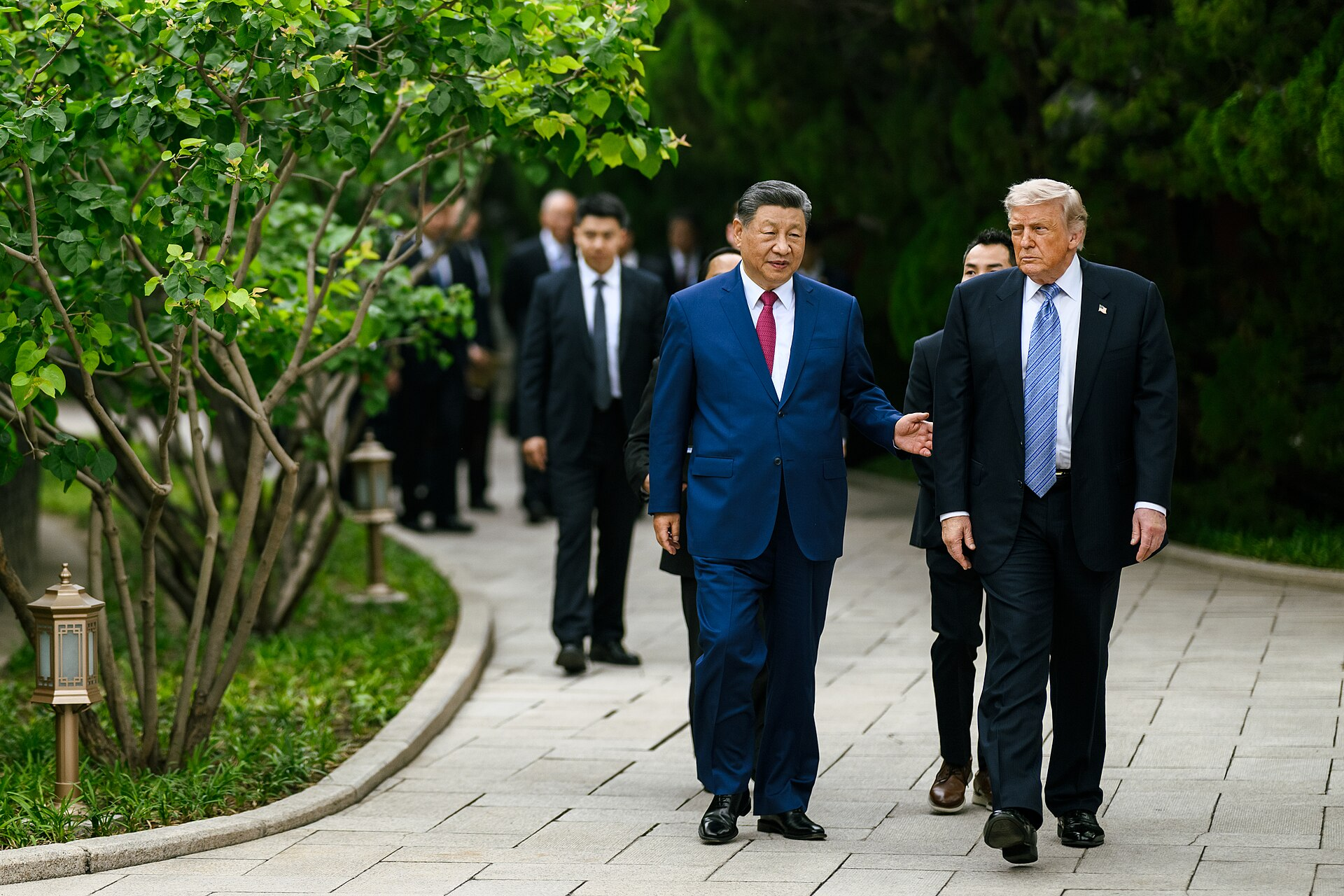
Parents in China consult a variety of sources when considering overseas study options, with official state media serving as a key channel for both factual information and insight into China’s relations with destination countries. The mid-2026 Trump-Xi summit in Beijing, reinforced by the anticipated Xi visit to the US this fall, has locked in a period of strategic stability. This has triggered a powerful 2026 “vibe shift” in the Chinese public narrative: official media is now actively promoting stable and steadily improving US-China relations, moving beyond 2025 tensions into an era of managed cooperation where educational ties are openly celebrated. For proactive US institutions, this positive and predictable climate offers a prime opportunity to confidently engage Chinese families, rebuild trust, and secure premium student pipelines.
The Media Narrative: Reassuring Chinese Parents
In recent months, official Chinese media outlets like Xinhua and the People’s Daily have actively advanced the narrative that bilateral relations are stable and steadily improving. Following the summit, state media elevated the phrase “constructive strategic stability” to a core diplomatic guideline. Xinhua reported that President Xi Jinping defined it as “a positive stability with cooperation as the mainstay, a sound stability with moderate competition, a constant stability with manageable differences, and an enduring stability with promises of peace.” This framework explicitly groups youth and educational ties under the pillar of “active stability with cooperation as the mainstay,” highlighting people-to-people exchanges as a foundation for long-term bilateral friendship.
This deliberate media framing sends a clear green light to provincial education bureaus, elite high school counselors, and middle-class families. It signals a major vibe shift in 2026: the high geopolitical tensions that characterized 2025 have successfully transitioned into a period of managed cooperation, where people-to-people connections and study-abroad pathways are being openly encouraged.
Exchanges in Focus: Subnational and Academic Ties
We are already seeing this positive momentum play out on a subnational level. On June 5, 2026, San Francisco hosted the Eighth China-US Sister Cities Conference, bringing together over 300 delegates from 80-plus provinces, states, and cities to discuss youth engagement and education. Serving as a clear proof point of an improving bilateral vibe, the conference concluded with the signing of five new cooperation agreements covering 31 collaborative projects.
Meanwhile, China has been keen to tout US-China educational exchanges through high-profile, state-backed initiatives. China’s Ministry of Education is actively encouraging Chinese universities to establish new transnational education (TNE) programs with international partners, including U.S. institutions, by approving dozens of joint initiatives as it pushes to dramatically expand TNE enrollment toward 8 million students. Official media has heavily praised the 'YES Friends' corporate-academic partnership, the elite 'Zhi-Xing China' Youth Leaders Dialogue, and the recent Schwarzman Scholars Alumni Reunion. We expect official media to continue the positive coverage of US-China education exchanges throughout the year.
Aligned Incentives to Protect the Status Quo
This steady state is driven by strong political incentives on both sides to avoid rocking the boat. President Trump clearly wants a lasting deal with Xi Jinping and is loathe to undermine that progress. As the administration focused on the economy, vanity projects in DC, and adventurism in Latin America and the Middle East, it hasn’t had time or energy to antagonize China in 2026. In fact, Trump openly defended the presence of Chinese students on American campuses during the summit cycle, warning that restricting them would severely damage the U.S. university system. In his May 14, 2026, interview with Sean Hannity in Beijing, Trump stated: “As far as the students, it’s 500,000 students they come—good students. I could tell them, ‘I don’t want any students,’ is a very insulting thing to say to a country.”
Concurrently, Beijing is highly motivated to maintain a predictable external environment as it navigates internal personnel transitions ahead of the 21st Party Congress in late 2027. As senior fellow at Harvard Kennedy School Shirley Ze Yu noted, “Xi requires external stability to manage a generational personnel turnover... [and] seek[s] predictability, not escalation.” Neither side wants disruptions. This shared desire for transactional predictability means that the current climate of stability is set to last straight through the fall recruitment cycle.
Capitalizing on the “Vibe Shift”
Capitalizing on this positive trend is about leveraging the better media narrative to build back much-needed trust with Chinese parents in 2026.
Own Your Local Narrative: With official media actively cultivating a supportive atmosphere for bilateral exchange, universities have a premier opportunity to amplify their presence. Establishing a robust, localized Chinese digital footprint via channels like WeChat, Bilibili, and RedNote allows you to directly reassure anxious parents of your campus’s long-term commitment.
Build Direct High School Links: Subnational connections matter more than ever. Participating in expert-led, face-to-face recruitment tours remains the single most reliable method for converting applicant interest into deposits.
From localized digital campaigns to recruitment tours in tier 2-3 cities, Sunrise provides you the tools required to transform this window of political stability into a sustainable, high-yield recruitment pipeline. The environment is steady; the opportunity is yours to take. Contact us to seize the opportunity.